
THE FLORIDA AQUARIUM TEAM SUCCEEDS IN FIRST-EVER SPAWNING OF THREATENED ELKHORN CORAL IN A CONTROLLED ENVIRONMENT
September 13, 2022
Share Story

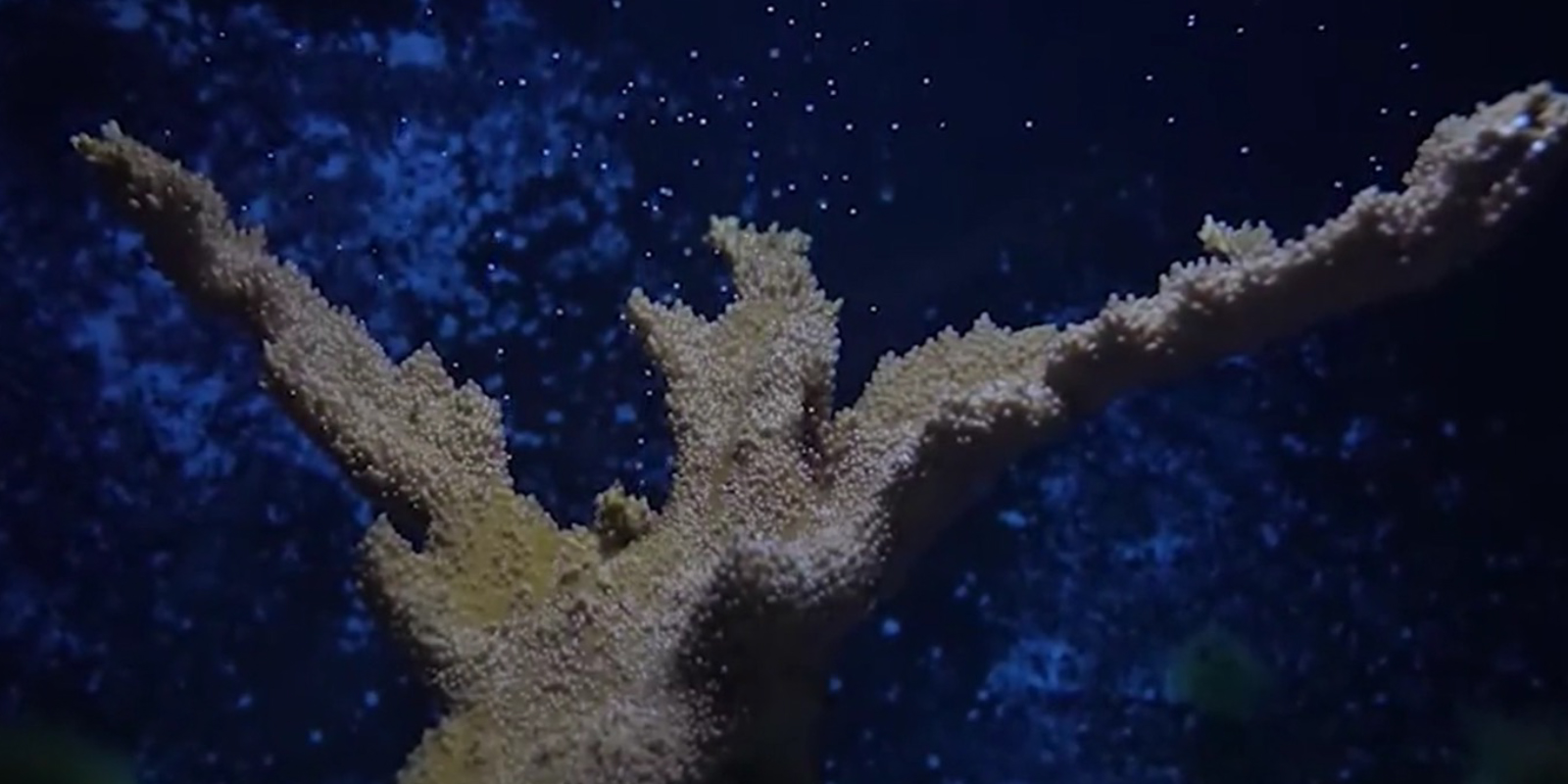
Tampa, FL (September 13, 2022): For the first time anywhere, scientists at The Florida Aquarium have successfully nurtured multiple threatened elkhorn coral fragments to begin spawning in a controlled environment. The discovery offers hope that the vital technique can be replicated to help replenish the Elkhorn coral population on Florida’s Coral Reef.
While many people may think corals are a type of plant or even just rocks, they are actually a colony of tiny animals called polyps with their own life cycles of breeding, feeding, and growing. Together, billions of coral polyps create the structure that we know as coral reefs, and over centuries build massive formations along coastlines in the tropics. Elkhorn corals are an important reef framework building species that has suffered from severe declines due to disease and climate change. Scientists from The Florida Aquarium have been working tirelessly over the past two years to replicate environmental conditions including seasonal temperatures and solar and lunar cycles to induce spawning in their lab setting.
However, in 2021, the first attempt at spawning this species was not successful. Scientists realized there was a minor difference between the natural moonrise time and the moonrise that occurred using the artificial lighting system. This difference did not seem to matter for multiple other species of coral who spawned right on schedule, but the elkhorn coral seemed to be sensitive to it. With support from lighting manufacturer EcoTech Marine, an entirely new lighting control system was developed and brought online by Senior Biologist Rachel Serafin after the failed 2021 spawning attempt.
“Our partners at EcoTech Marine were critical in helping us solve this problem, along with the high standards of animal care we provide to all of the corals in our conservation program. We are immensely relived that our hard work over the past year has made a difference,” said Rachel Serafin, a Senior Biologist for the Coral Conservation Program and the primary caregiver for elkhorn corals.
“The elkhorn coral is one of the most challenging species to keep in an aquarium. Our team has worked to not only keep the parent fragments alive and well, but also to ensure that they receive all of the environmental cues they need to reproduce. Coral reproduction is an extremely complex process, and we only get one chance per year to perfect it! This has been especially challenging for elkhorn coral. Once we can reliably spawn this species every year, we can begin to explore how to make their dwindling population more resilient to threats like climate change,” said Keri O’Neil, a senior coral researcher at The Florida Aquarium.
Named for the large antlers of male elk that they resemble, elkhorn coral often grows on the top layer of coral reefs; forming habitats for other commercially important species and serving as the first line of defense against hurricanes that can push storm surges onto Florida coasts. The coral fragments used in the spawning efforts originated from the Florida Keys National Marine Sanctuary, where elkhorn corals are dwindling in the wild and no new offspring have been documented in decades. The coral fragments were collected for the project by staff from the Coral Restoration Foundation, Mote Marine Laboratory, Reef Renewal, and Biscayne National Park. The new offspring of the corals raised at The Florida Aquarium will return to these partners for reef restoration efforts across Florida, including the Mission: Iconic Reefs project in the Florida Keys. This project aims to restore nearly three million square feet of Florida’s Coral reef at seven key reef sites.
In partnership with NOAA Fisheries and the Florida Fish and Wildlife Conservation Commission, The Florida Aquarium cares for 16 species of coral native to Florida’s Coral Reef. Elkhorn coral marks the 14th coral species to spawn under human care at The Florida Aquarium.
This research dovetails with a range of other projects at The Florida Aquarium to protect coral reefs. This year, in collaboration with the University of Florida, scientists succeeded in breeding and releasing hundreds of baby long-spined sea urchins. These urchins control algae growth on coral reefs, keeping their surface clean and suitable for settlement of small baby corals that are easily outcompeted by algae.
These critical conservation achievements facilitate The Florida Aquarium’s ability to increase the genetic diversity of coral offspring, conduct vital health research to improve coral care and husbandry techniques, and scale up coral propagation rates. This important work was made possible with support from the NOAA Restoration Center and the National Fish and Wildlife Foundation. The views and conclusions contained in this release are those of the authors and should not be interpreted as representing the opinions or policies of the U.S. Government or the National Fish and Wildlife Foundation and its funding sources.
The Latest from The Florida Aquarium
-
September 24, 2026
The Florida Aquarium Celebrates Tampa Bay’s Frontline Heroes with Complimentary Admission
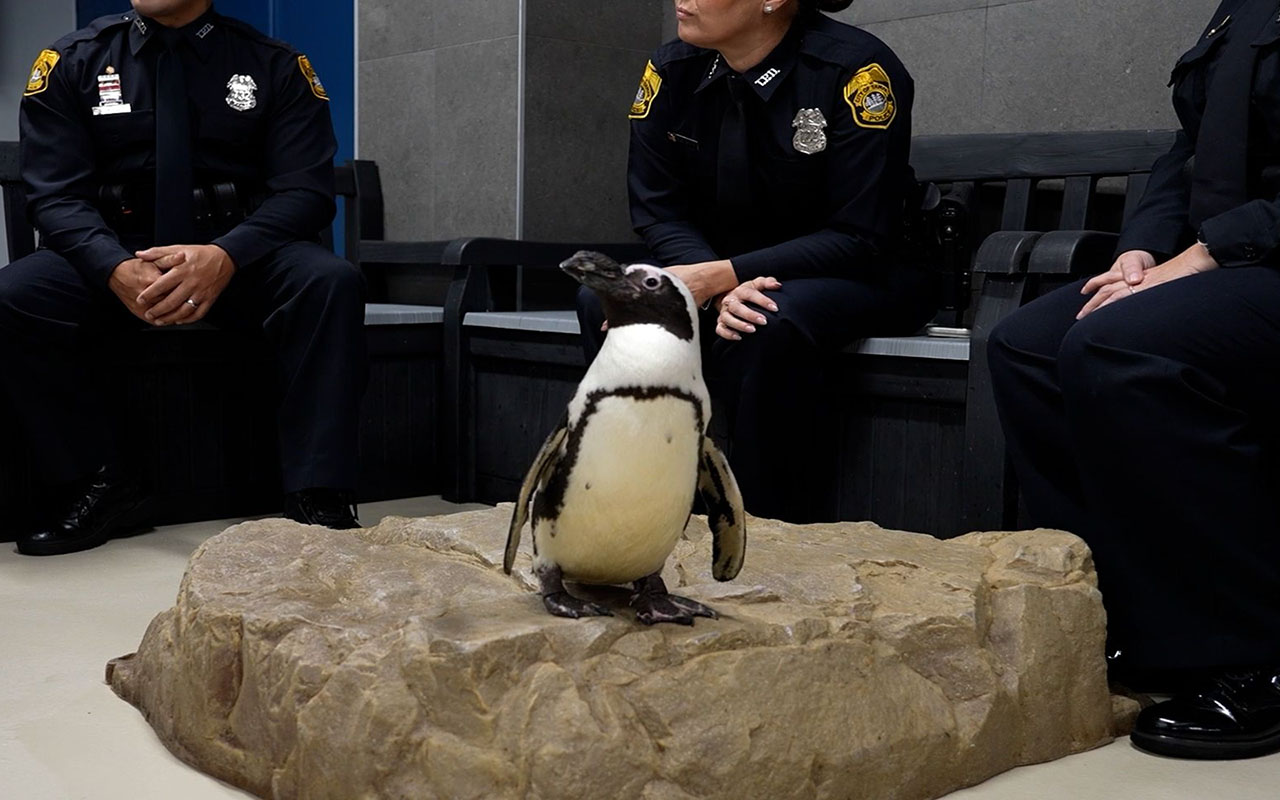
Tampa’s Acting Police Chief and officers get up close with the Aquarium’s penguins Tampa, FL (September 24, 2026) – The Florida Aquarium welcomed Tampa’s Acting Chief of Police Brett Owen and several Tampa Police Department officers Wednesday for a special visit featuring one of the Aquarium’s most popular animal ambassadors: penguins. Officers snapped selfies, learned…
Read More -
September 4, 2026
The Florida Aquarium Joins Statewide Effort to Create the Next Generation of Florida’s Coral Reef
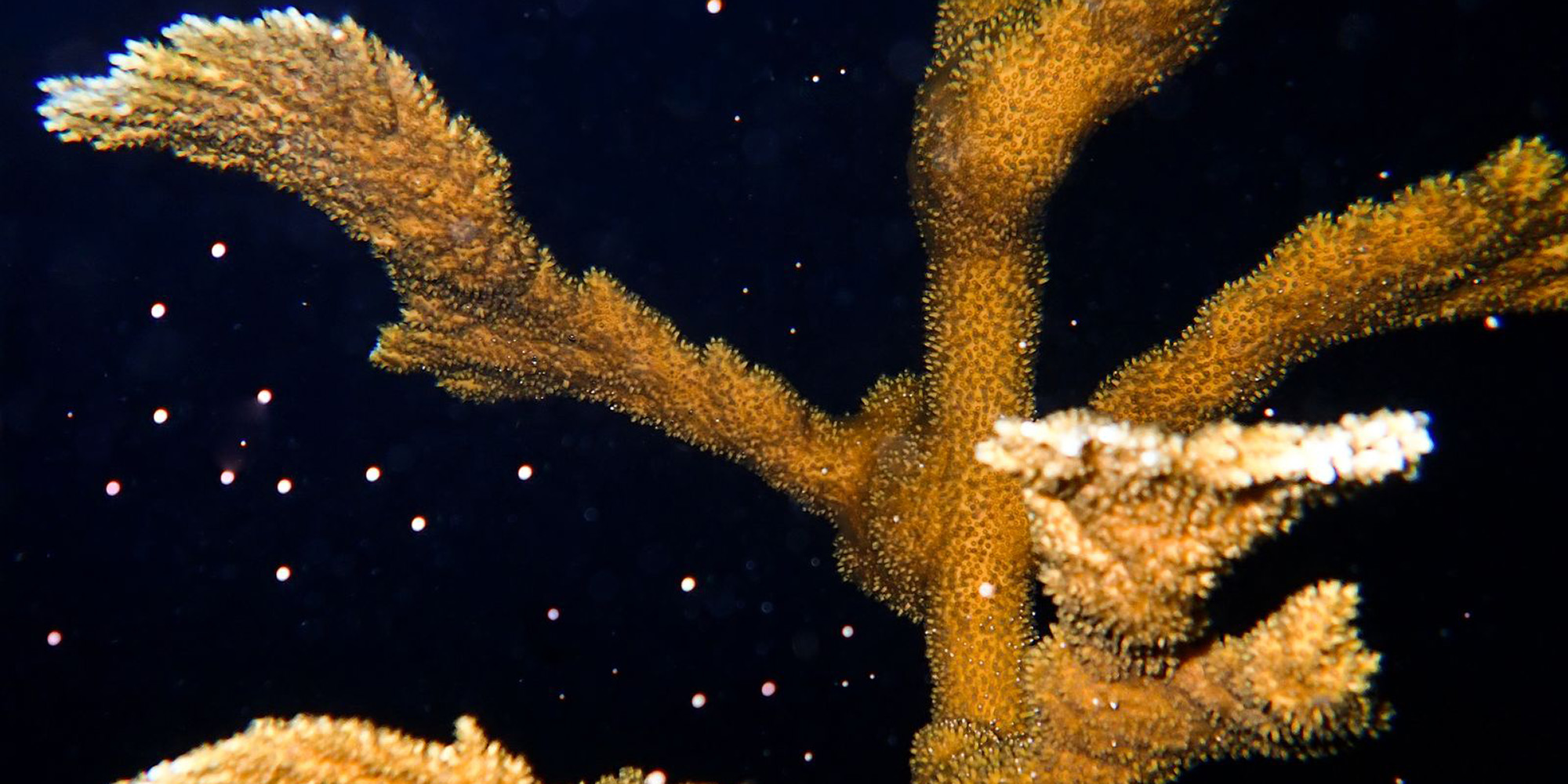
Scientists Produce 61,000 Coral Larvae and 101 Unique Genetic Crosses to Help Build More Resilient Reefs KEY LARGO, FL – Bringing years of expertise in breeding and raising corals, four coral experts from The Florida Aquarium joined 11 other leading scientific and conservation organizations in what may be one of the largest collaborative coral conservation…
Read More -
August 18, 2026
Bring Your Favorite Plushie to The Florida Aquarium for the “Cutest Check-Up in Town”
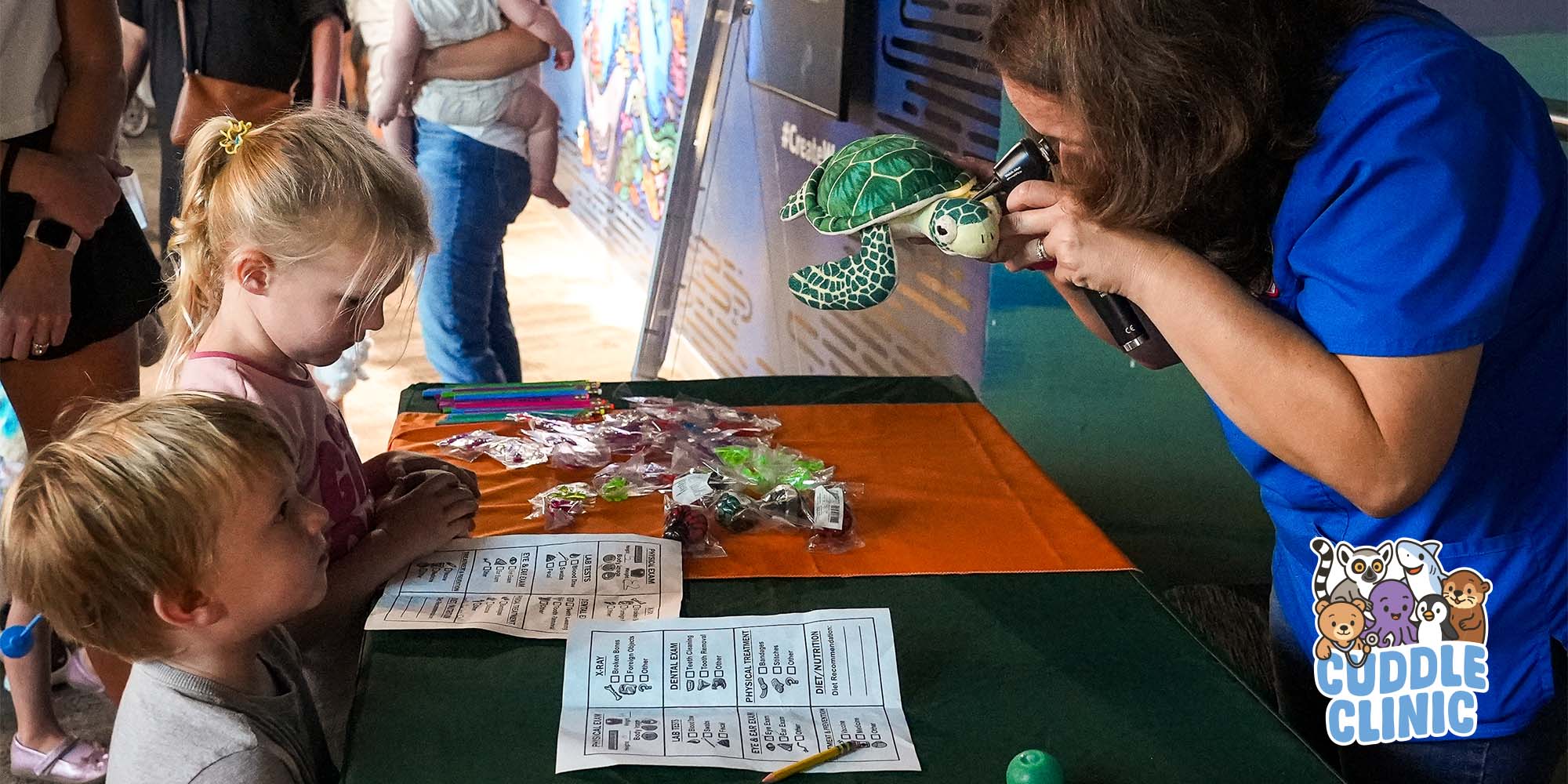
Tampa, FL – Teddy bears, stuffed sharks, and plushies of all shapes and sizes are all invited to The Florida Aquarium for the Cuddle Clinic, a playful, hands-on event that combines imagination with learning. Known as the “Cutest Check-Up in Town”, families can bring their favorite plush toy to the Aquarium for a comprehensive “check-up”…
Read More

Stay Up to Date
Want to know what’s happening below the surface? Sign up to receive our email newsletter, “The Current”, and dive into the latest news, events, and exhibit updates happening here at the Aquarium.