
Florida Aquarium Volunteer-Designed Bamboo “Tents” To Protect Young Corals After Return To Reef
March 8, 2022
Share Story

Tampa, FL (March 8, 2022): Biodegradable and low-cost, the humble bamboo barbecue skewer could soon play an important role in helping restore at-risk coral populations off the coast of Florida by protecting growing baby corals from predators.
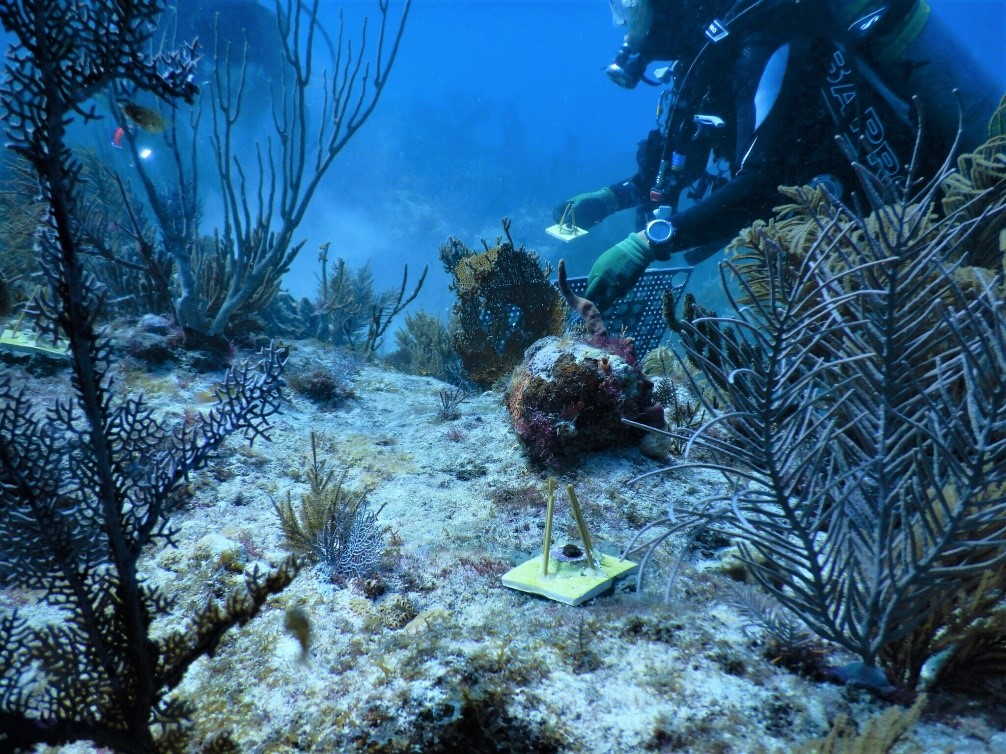
In an important achievement for restoration of threatened coral species, The Florida Aquarium (TFA) researchers successfully reared nearly 1,000 mountainous star coral offspring produced during a 2020 coral spawning event in Biscayne National Park. The mountainous star coral (Orbicella faveolata) is listed under the Endangered Species Act, is susceptible to stony coral tissue loss disease, and has suffered steep population declines in Florida waters. Divers from the University of Miami Rosenstiel School of Marine and Atmospheric Science and the National Park Service recently returned the young corals to reef sites in Biscayne National Park. Approximately 452 of these corals were outfitted for the first time with pre-made protective bamboo “tents” developed by an Aquarium volunteer and former teacher, Patrick McGirk.
“We are incredibly fortunate to have a dedicated and engaged volunteer like Patrick,” said Keri O’Neil, MS, Manager & Senior Scientist, Coral Conservation Program. “He is not only committed to caring for the corals but understands the challenges and thinks critically about how he can make a difference.”
Patrick has been a volunteer for over 4 years logging over 2,400 volunteer hours at the Aquarium’s Center for Conservation. He has a passion for restoring Florida’s Coral Reef that show’s every day by his willingness to spend countless hours sitting at a microscope and use a small needle to scrape away algae that could overgrow the baby coral.
While colorful and varied corals may resemble plants, they are actually living animals that develop through a regular life cycle of spawning, fertilizing and growing from small planktonic larvae into juvenile and finally adult corals of a wide variety of shapes, sizes, and colors. They have complex and diverse lifestyles, and their tiny juvenile forms are highly susceptible to mortality from things like algae overgrowth and predation. In fact, far less than 1% of juvenile corals will ever reach adulthood without human intervention. The Florida Aquarium is working to change that statistic.
Parrotfish, while providing a helpful service to reefs by grazing on algae that can smother corals, can often cause harm to small corals that were recently returned to the reef in restoration efforts. Their large front teeth can bite into living coral and leave behind scars, and sometimes cause enough damage to be fatal to small corals. Many coral restoration practitioners in Florida have observed that parrotfish predation heavily occurs within one to two weeks of outplanting corals to the reef.
Earlier in 2021, partner researchers at the Florida Fish and Wildlife Conservation Commission showed in a pilot project that bamboo skewers oriented in a tent formation provided protection to young corals reared at TFA when returned to reefs in the Florida Keys. However, the skewers were extremely difficult and time-consuming to deploy by divers in the water. This led Patrick to develop a method of pre-drilling a ceramic tile and mounting the coral and the skewers on land, creating a pre-made device nicknamed “Patrick’s Parrotfish Protectors,” (PPP). The ultimate function of the PPP is to provide a harmless deterrent that discourages the fish from biting, and will biodegrade over time.
“We are in a race to save the world’s reefs, and we will take all the help we can to win this fight,” said Brian Reckenbeil, MS, Coral Restoration Manager at The Florida Aquarium. “While seemingly rudimentary, these tents are an innovative tool we can test in the real-world environment to determine what impact they will have in protecting these vulnerable coral babies.”
Time will tell if Patrick’s Parrotfish Protectors are a viable option as protective stakes, and whether this method can be scaled up for larger restoration projects.
To test the effectiveness of PPPs, University of Miami researchers and the National Park Service outplanted hundreds of coral colonies raised by TFA on southeast Florida reefs under three treatment levels; 1) no protection, 2) bamboo skewers preinstalled in PPPs, and 3) bamboo skewers installed during outplanting. Recently, UM researchers monitored a subset of these outplants.
Early results show that 58% of the corals outfitted with the pre-installed PPPs were completely healthy with no evidence of predation as compared to 13% of the unprotected coral and 18% of those with skewers installed at time of outplant. In addition, the amount of fragments that went missing was twice as high for corals with no protection (52%) compared to corals that had stakes installed (<30%).
These preliminary results indicate that newly outplanted corals may benefit from the addition of protection devices. As the PPPs showed the highest numbers of 100% healthy uneaten corals, we can conclude that this technique deters fish from attempting to eat the corals.
If the pre-made PPP’s continue to be successful, researchers plan to work with engineering and manufacturing teams to pre-fabricate these devices in large quantities, and investigate alternative biodegradable materials. Future research will aim to understand drivers of fish predation and develop additional methods to enhance survivorship of nursery-grown corals once outplanted.
Coral reefs around the world are dying off at an alarming rate due to changes in ocean chemistry, pollution, and climate change. The Florida Aquarium is the nation’s largest coral breeding facility whose operations have grown to rear thousands of baby and juvenile corals that scientific institutions across the state use when outplanting coral to reefs. These populations help test new varieties and techniques to replenish Florida reefs. The work remains focused on developing diverse offspring that may be more durable to threats such as disease and climate change.
This work is project of the Southeast Florida Coral Restoration Hub, and was made possible with support from the National Fish and Wildlife Foundation and the Association of Zoos and Aquariums grant for America’s Keystone Wildlife. The Florida Aquarium, the University of Miami, and Biscayne National Park work together to promote coral recovery in the park and in southeast Florida. The views and conclusions contained in this document are those of the authors and should not be interpreted as representing the opinions or policies of the U.S. Government or the National Fish and Wildlife Foundation and its funding sources.
The Latest from The Florida Aquarium
-
October 21, 2026
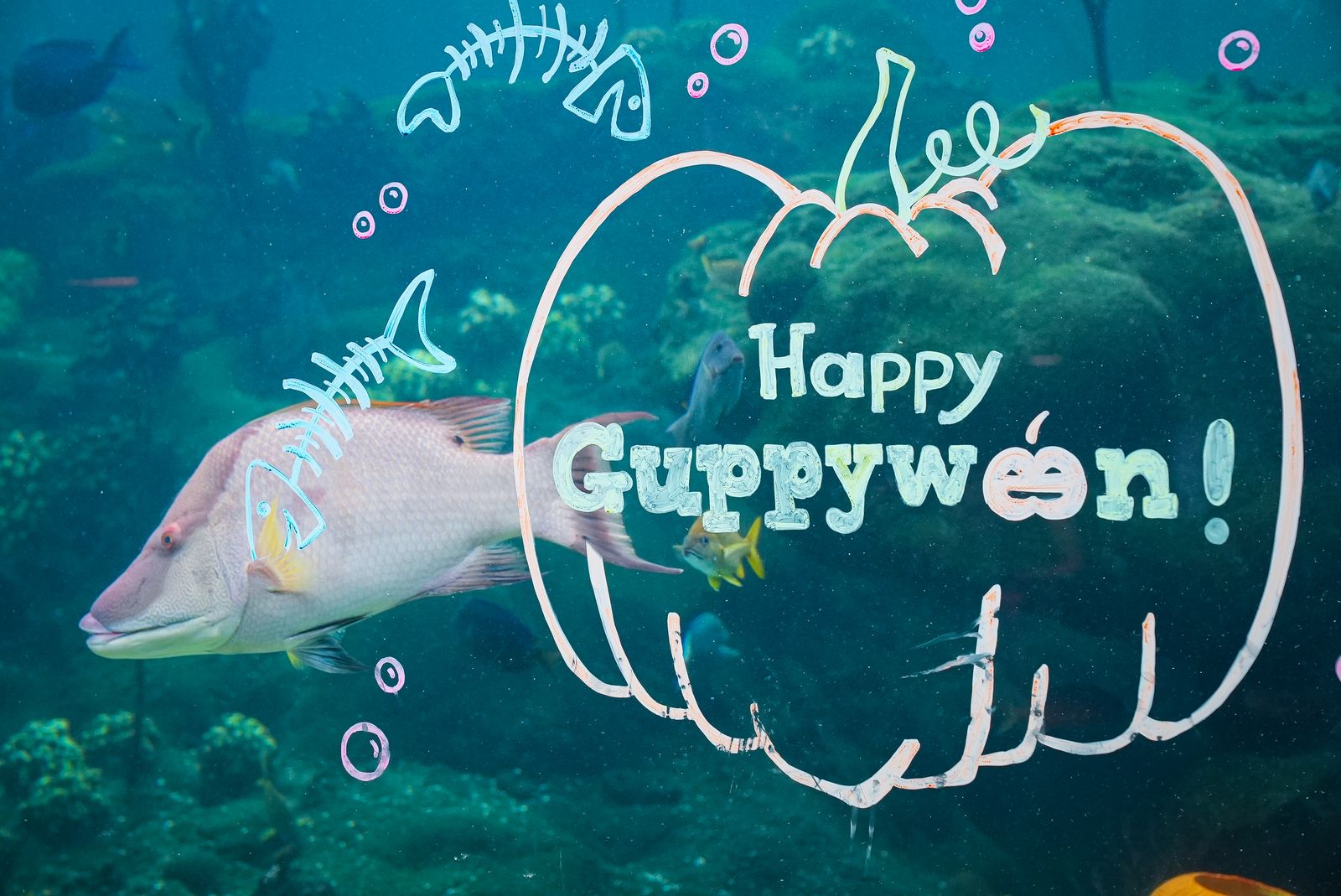
Trick-or-Treat Under the Deep Boo Sea: Guppyween Returns to The Florida Aquarium
Presented by BayCare Kids, this Halloween family-friendly event also features festive food, animal encounters, and underwater pumpkin carving Tampa, FL (October 21, 2026) – Little ghosts, goblins, pirates and princesses are invited to celebrate Halloween at The Florida Aquarium’s annual Guppyween, returning Oct. 24–31 with trick-or-treating, animal encounters, costumed divers and a new scavenger…
Read More -
October 18, 2026
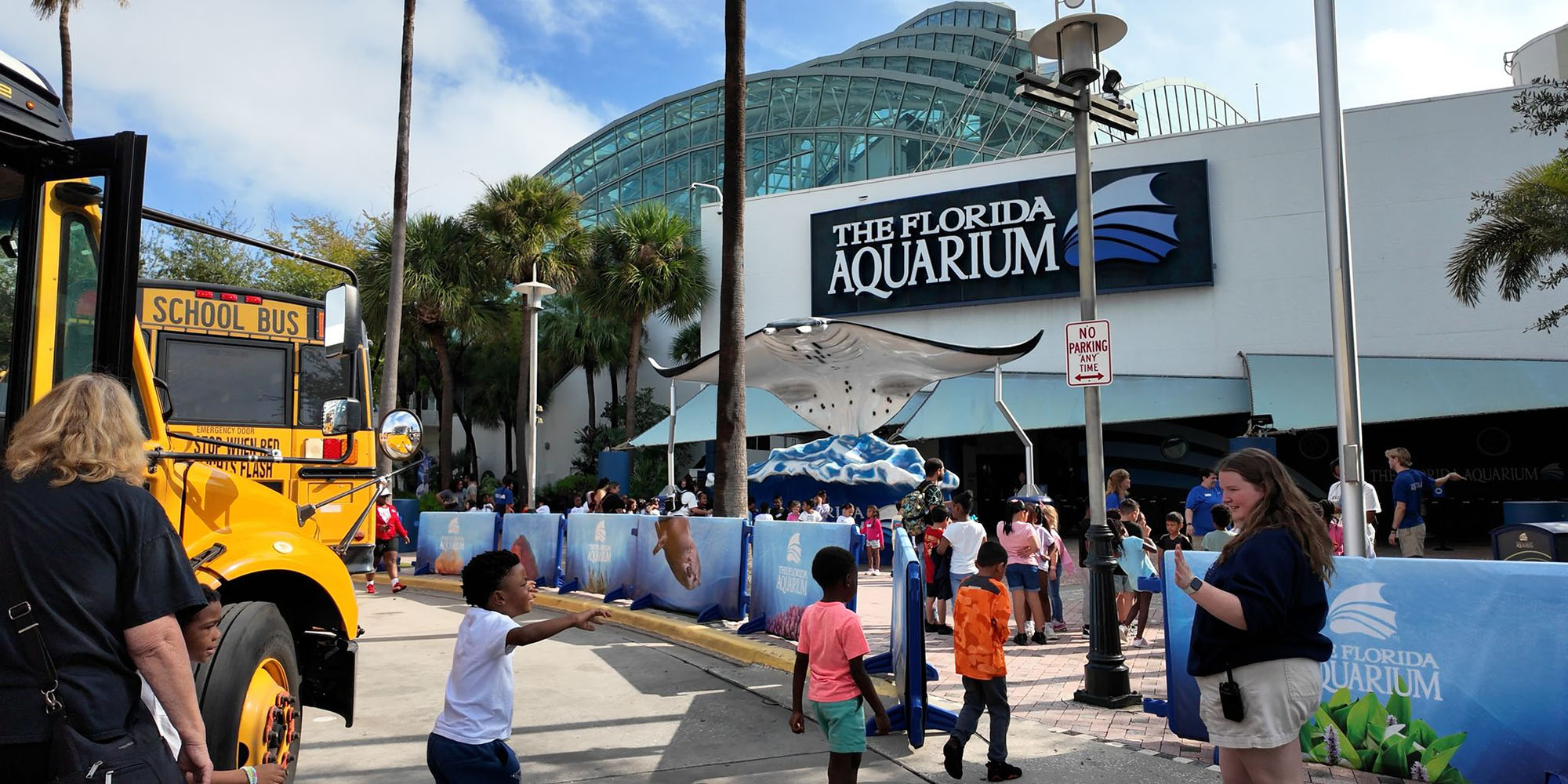
First Graders Dive into Learning at The Florida Aquarium as Hillsborough Schools Launches Referendum-Funded Field Trips
Students experience marine life firsthand as part of taxpayers’ investment in learning beyond the classroom TAMPA, FL (October 18, 2026) – First graders from Bryan Plant City, Mabry, and Tampa Bay Boulevard Elementary Schools will be among the first Hillsborough County Public Schools (HCPS) students to experience a new opportunity made possible through referendum-funded millage…
Read More -
September 24, 2026
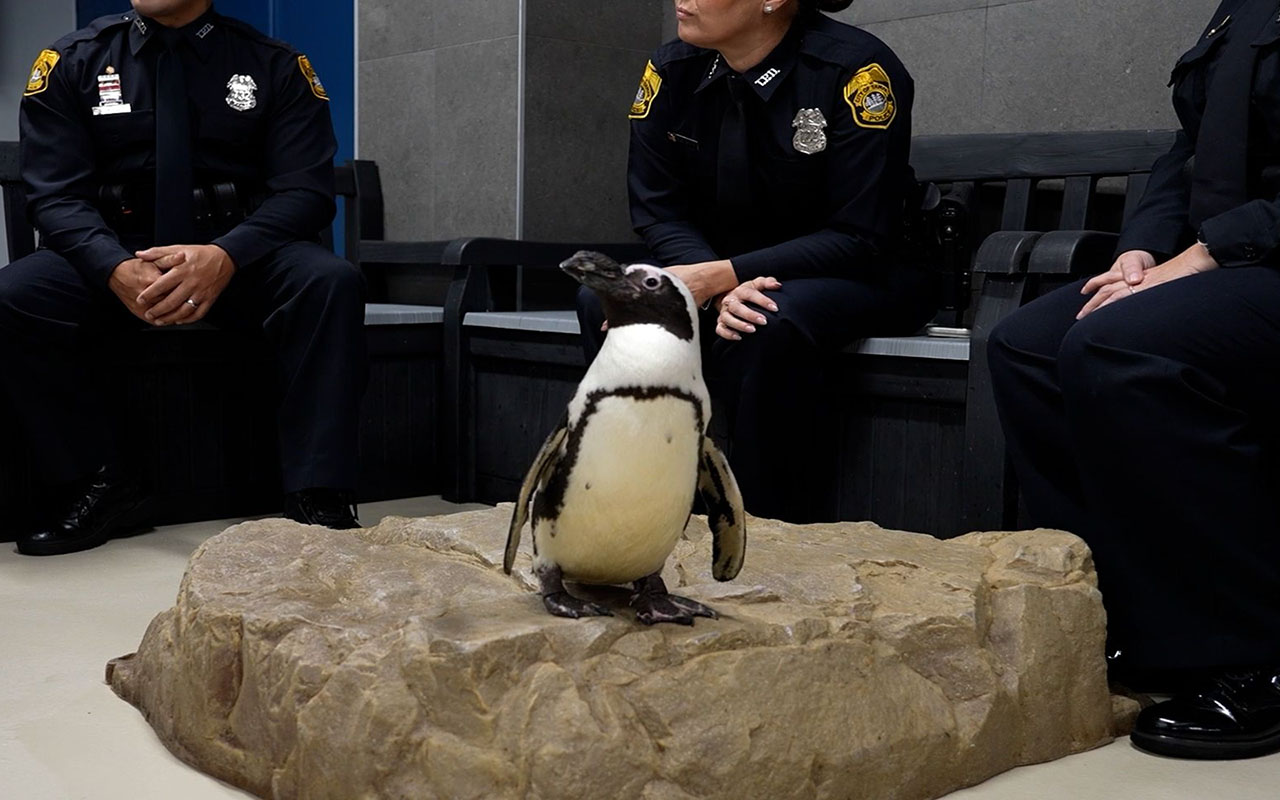
The Florida Aquarium Celebrates Tampa Bay’s Frontline Heroes with Complimentary Admission
Tampa’s Acting Police Chief and officers get up close with the Aquarium’s penguins Tampa, FL (September 24, 2026) – The Florida Aquarium welcomed Tampa’s Acting Chief of Police Brett Owen and several Tampa Police Department officers Wednesday for a special visit featuring one of the Aquarium’s most popular animal ambassadors: penguins. Officers snapped selfies, learned…
Read More

Stay Up to Date
Want to know what’s happening below the surface? Sign up to receive our email newsletter, “The Current”, and dive into the latest news, events, and exhibit updates happening here at the Aquarium.